
1. Toradh thallview
The Electro-Harmonix Pico Triboro Bridge is a versatile multi-mode drive pedal designed to provide a wide range of tonal possibilities. It features three distinct modes: Overdrive, Distortion, and Fuzz, allowing musicians to bridge any gap in their gain requirements. With its powerful EQ capabilities, input contouring, and compact pico-sized footprint, the Triboro Bridge can serve as a foundational element for your tone or offer a fresh alternative to your existing drive pedals.
Prìomh fheartan:
- Wide range of saturation with Overdrive, Distortion, and Fuzz modes.
- Treble control boosts or cuts high end in Overdrive and Distortion modes.
- Bass control boosts or cuts low end in Overdrive and Distortion modes.
- Fuzz mode features a dedicated Gate control and a Low Pass Filter.
- Includes a power adapter for immediate use.

Ìomhaigh: Ceàrnach view of the Electro-Harmonix Pico Triboro Bridge pedal, highlighting its compact size and control knobs.
2. Suidheachadh agus Ceanglaichean
Follow these steps to connect your Pico Triboro Bridge pedal to your audio setup:
- Ceangal cumhachd: Connect the included 9V DC power adapter to the power jack on the top of the pedal. Ensure the power supply meets the pedal's specifications (9V DC, center-negative).
- Ceangal a-steach: Ceangail an ionnsramaid agad (giotàr, beus, msaa.) ris an t-seacaid INPUT air taobh deas a’ pheadail a’ cleachdadh càball ionnsramaid àbhaisteach 1/4-òirleach.
- Ceangal toraidh: Ceangail an jack OUTPUT air taobh clì a 'pheadal ri do chuid ampan lifier no an ath pheadal anns an t-sreath chomharran agad a’ cleachdadh càball ionnstramaid àbhaisteach 1/4-òirleach.
- Cumhachd air: Once all connections are secure, plug the power adapter into a wall outlet. The pedal's LED will illuminate when active.
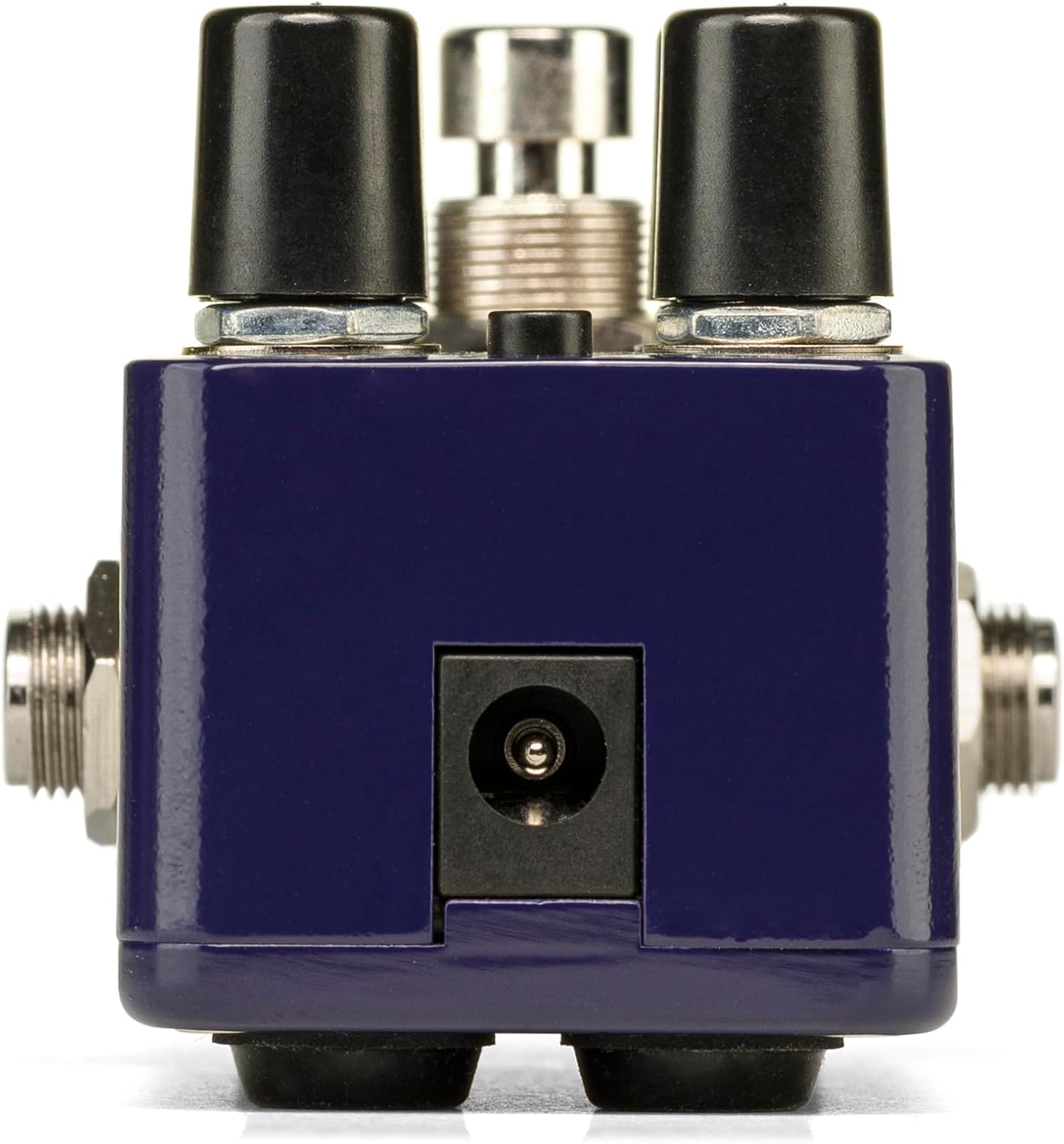
Ìomhaigh: Cùl view of the Pico Triboro Bridge pedal, showing the power input jack for connecting the power adapter.
3. Controls and Operation
The Pico Triboro Bridge features intuitive controls for shaping your desired drive tone. Understanding each knob and button is key to unlocking its full potential.
Knobs smachd:
- Vol (Volume): Controls the overall output level of the pedal. Adjust this to balance the effect's volume with your bypassed signal or other effects.
- GAIN: Controls the intensity of the drive, distortion, or fuzz effect. Higher settings result in more saturation and sustain.
- BASS / GATE:
- In Overdrive and Distortion modes, this knob functions as a Bass control, allowing you to boost or cut low frequencies.
- In Fuzz mode, this knob functions as a GAIDHEAL control, adjusting the noise gate threshold to eliminate unwanted noise and feedback.
- TREBLE / TONE:
- In Overdrive and Distortion modes, this knob functions as a TREOBHAINN control, allowing you to boost or cut high frequencies.
- In Fuzz mode, this knob functions as a TÒIN control, specifically a Low Pass Filter, for extreme tonal variations and shaping the fuzz character.
TYPE Button:
The small button labeled "TYPE" at the top of the pedal is used to select between the three primary drive modes and to engage the Input Contour Mode.
- Taghadh Modh: Pressing the TYPE button cycles through the Overdrive (green LED), Distortion (orange LED), and Fuzz (red LED) modes.
- Input Contour Mode: Press and hold the TYPE button to enable or disable the Input Contouring EQ. When active, this mode applies a specific EQ to the input signal for a tighter, more modern character across all drive modes.

Ìomhaigh: Mullach view of the Pico Triboro Bridge pedal, illustrating the layout of the VOL, GAIN, BASS/GATE, TREBLE/TONE knobs, and the TYPE button.
4. Drive Modes Explained
The Pico Triboro Bridge offers three distinct drive modes, each with its unique sonic characteristics:
- Overdrive Mode (Green LED): This mode provides a gain spectrum ranging from low to mid-level saturation with an open voicing. It is ideal for use as a subtle "always-on" drive, adding warmth and grit, or as a solo boost to push your amplosgadair.
- Distortion Mode (Orange LED): Engaging this mode provides additional gain-staging, delivering tones from crunchy rhythms to fully saturated leads. It offers a more aggressive and compressed sound compared to the Overdrive mode.
- Fuzz Mode (Red LED): This mode transforms the pedal into a high-gain fuzz effect with over-the-top saturation. The BASS knob becomes a GATE control, and the TREBLE knob becomes a Low Pass Filter, allowing for unique and extreme tonal variations specific to fuzz.
Video: Official demonstration of the Electro-Harmonix Pico Triboro Bridge pedal, showcasing its Overdrive, Distortion, and Fuzz modes, along with an overview of its controls and input contouring feature. This video highlights the tonal versatility of the pedal for both guitar and bass.
5. Sònrachaidhean
| Feart | Sònrachadh |
|---|---|
| Cuideam nì | 1.21 not (0.55 cileagram) |
| Meudan toraidh | 3.65"F x 2"L x 2"À (3.65 x 2 x 2 òirleach) |
| Àireamh Modail Nì | PICO TRIBORO |
| Stuth Corporra | Plastaig, meatailt |
| Dath | Gorm |
| Seòrsa ceangail | Power Adapter (1/4-inch Audio Hardware Interface) |
| Cruth chomharran | Analog |
| Stòr cumhachd | Electric Corded |
| Voltage | 9 Volt |
6. Cumail suas
To ensure the longevity and optimal performance of your Pico Triboro Bridge pedal, follow these maintenance guidelines:
- Glanadh: Cleachd clò bog, tioram gus taobh a-muigh a’ pheadail a ghlanadh. Seachain innealan-glanaidh sgrìobach, fuasglaidhean, no cus taiseachd, oir faodaidh iad sin milleadh a dhèanamh air a’ chrìochnachadh no air na pàirtean a-staigh.
- Stòradh: Store the pedal in a cool, dry place away from direct sunlight, extreme temperatures, and high humidity when not in use.
- Ceanglaichean: Thoir sùil bho àm gu àm air a h-uile ceangal càball airson caitheamh is deòir. Dèan cinnteach gu bheil na seacaidean saor bho dhuslach is sprùilleach.
- Solar cumhachd: Always use the recommended 9V DC center-negative power adapter. Using an incorrect power supply can damage the unit and void the warranty.
7. A ’dèanamh trioblaid
If you encounter issues with your Pico Triboro Bridge pedal, refer to the following common troubleshooting steps:
- Gun fhuaim:
- Thoir sùil air a h-uile ceangal càball (ionnstramaid gu cuir a-steach, toradh gu amp).
- Dèan cinnteach gu bheil an inneal-atharrachaidh cumhachd ceangailte gu ceart agus ag obair.
- Dearbhaich gu bheil an inneal agad agus amptha an neach-gleidhidh ag obair gu ceart.
- Check the pedal's bypass status; if it's true bypass, sound should pass even if the pedal is off.
- Weak or Distorted Sound (unexpectedly):
- Check the GAIN and VOL knob settings.
- Ensure the correct drive mode (Overdrive, Distortion, Fuzz) is selected for your desired sound.
- If in Fuzz mode, adjust the GATE and TONE (Low Pass Filter) knobs, as extreme settings can significantly alter the sound.
- Test with different cables and power supplies to rule out faulty accessories.
- Cus Fuaim/Hum:
- Ensure you are using a regulated, isolated power supply.
- If in Fuzz mode, adjust the GATE knob to reduce unwanted noise.
- Thoir sùil airson lùban talmhainn anns an t-suidheachadh agad.
- Move the pedal away from power transformers or other sources of electromagnetic interference.
8. Barantas agus Taic
Electro-Harmonix products are designed for reliability and performance. For warranty information, product registration, or technical support, please refer to the official Electro-Harmonix weblàrach-lìn no cuir fios chun roinn seirbheis teachdaiche aca. Cùm do chuidhteas ceannach mar dhearbhadh ceannach airson tagraidhean barantais.
Airson tuilleadh cuideachaidh, tadhal air: www.ehx.com