
1. Ro-ràdh
The Safety Pool Protector Electronic Monitoring System is designed to enhance pool safety by automatically sounding an alarm when a child or pet enters an unsupervised pool. This portable, self-contained unit detects water entry via an electronic sensor, triggering a loud pulsating alarm both at the main unit and at a remote receiver located inside your home. The system operates on one 9-volt battery (not included) and includes a remote receiver that can be placed up to 200 feet from the main unit.
2. Fiosrachadh Sàbhailteachd
- This device is an aid to supervision and does not replace the need for constant adult supervision of children and pets near water.
- Always ensure the alarm is active when the pool is unsupervised.
- Regularly test the alarm's functionality to ensure it is operating correctly.
- Keep the alarm unit and remote receiver dry and away from extreme temperatures.
3. Pasgan-susbaint
Dèan cinnteach gu bheil na pàirtean uile an làthair:
- Pool Protector Main Unit
- Glacadair Iomallach
- Leabhar-làimhe cleachdaiche (an sgrìobhainn seo)
Note: One 9-volt battery is required for the main unit and is not included.
4. Toradh thallview
The Pool Protector system consists of a main alarm unit designed for placement in the pool and a remote receiver for indoor monitoring.

Figear 4.1: Aghaidh view of the Pool Protector main unit, showing the display area and control buttons.
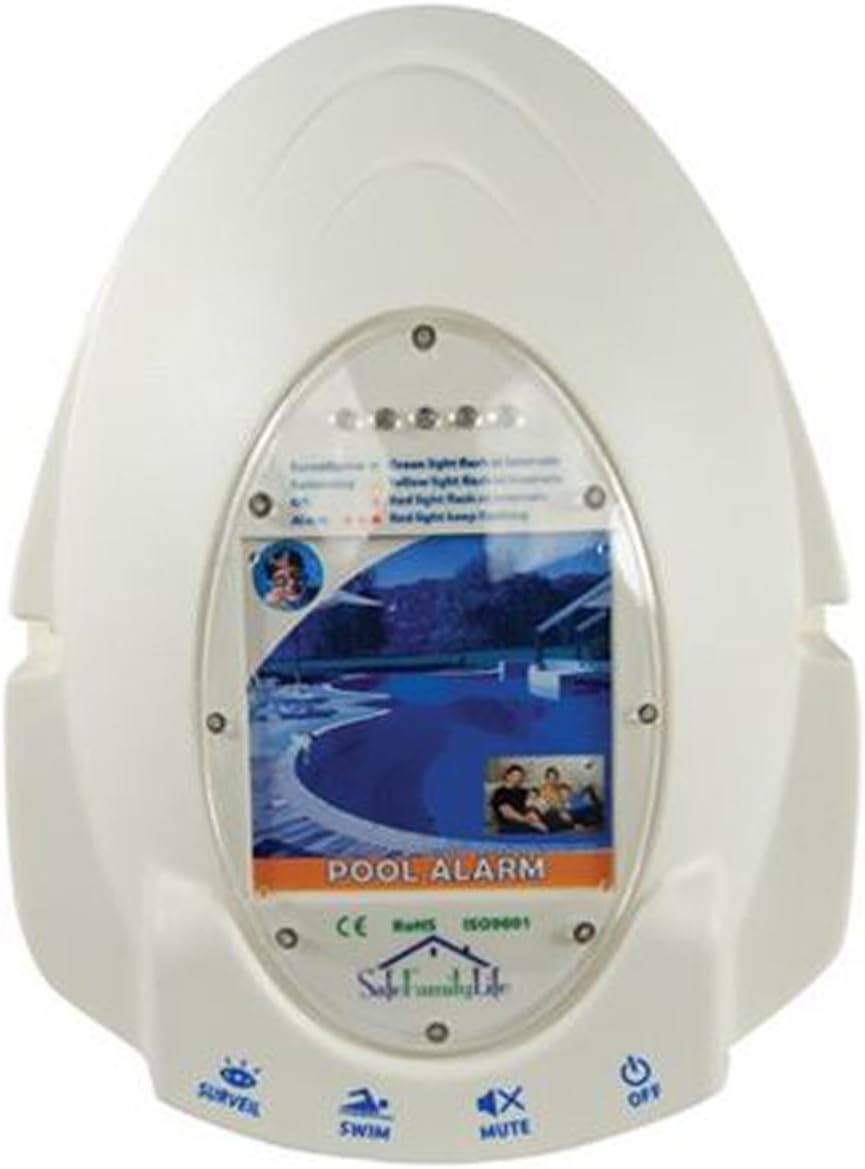
Figear 4.2: Aghaidh mhionaideach view of the Pool Protector main unit, highlighting the user interface.

Figear 4.3: Air ais view of the Pool Protector main unit, illustrating the mounting points and the water sensor probe.
5. Suidhich
5.1 Stàladh bataraidh
- Lorg an roinn bataraidh air a’ phrìomh aonad.
- Open the compartment and insert one new 9-volt alkaline battery, ensuring correct polarity.
- Securely close the battery compartment. The battery is expected to last approximately one year.
5.2 Main Unit Placement and Installation
The main unit is designed for easy installation. It should be mounted in a location within the pool that allows its sensor to detect water entry effectively, typically near the edge of the pool. Refer to Figure 4.3 for mounting points on the back of the unit.
- Choose a stable mounting surface at the pool's edge.
- Ensure the sensor probe extends into the water according to local regulations and product guidelines.
- Secure the unit firmly using appropriate hardware (not included) to prevent accidental displacement.
5.3 Remote Receiver Setup
The remote receiver can be mounted in your home up to 200 feet from the main unit.
- Select a central location within your home where the alarm can be clearly heard.
- Mount the receiver to a wall using appropriate fasteners.
- Ensure there are no major obstructions between the main unit and the remote receiver that could interfere with the wireless signal.
6. Stiùireadh Obrachaidh
6.1 Automatic Monitoring
Once installed and powered on, the Pool Protector main unit automatically monitors the pool for water disturbances. When the electronic sensor detects entry into the pool, it triggers a loud pulsating alarm.
6.2 Cur an gnìomh rabhaidh
Upon detection of water entry, the main unit will emit a loud pulsating alarm. Simultaneously, the remote receiver inside your home will also sound an alarm, alerting you to the event.
6.3 A’ cur stad air an inneal-rabhaidh
Specific instructions for silencing the alarm will be located on the device itself or in accompanying quick-start guides. Typically, a button on the main unit or remote receiver is pressed to acknowledge and silence the alarm.
7. Cumail suas
7.1 Ath-nuadhachadh bataraidh
If the pool alarm does not react to water disturbances or the alarm sounds weak, it is likely time to replace the 9-volt battery in the main unit. Follow the battery installation steps in Section 5.1.
7.2 Glanadh
Periodically clean the main unit and sensor probe to remove any debris, algae, or mineral buildup that could affect its performance. Use a soft cloth and mild detergent. Do not use abrasive cleaners or solvents.
7.3 Regular Testing
It is recommended to test the alarm system weekly by simulating an entry into the pool to ensure both the main unit and remote receiver are functioning correctly.
8. A ’dèanamh trioblaid
- Alarm gun fhuaim: Check the 9-volt battery in the main unit and replace if necessary. Ensure the unit is properly positioned in the water and the sensor is clear of obstructions.
- Remote receiver not alarming: Verify the remote receiver is within the 200-foot range of the main unit and that there are no significant signal obstructions. Check its power source (if applicable, typically battery or plug-in).
- Rabhaidhean meallta: Ensure the main unit is securely mounted and not subject to excessive movement from wind or water circulation. Clean the sensor to remove any debris.
- Weak alarm sound: Replace the 9-volt battery in the main unit.
9. Sònrachaidhean
| Feart | Sònrachadh |
|---|---|
| Modail Àireamh | poolalarm |
| Brand | Sàbhailteachd |
| Modh smachd | iomallach |
| Seòrsa stàladh | Srath balla |
| Raon as àirde | 200 Feet (Remote Receiver) |
| Teicneòlas mothachaidh | Gluasad |
| Stòr cumhachd | Cumhachd bataraidh |
| Seòrsa bataraidh | 9-volt Alkaline (not included) |
| Beatha bataraidh tuairmseach | Mu thuairmeas bliadhna |
| Cuideam nì | 1 Punnd |
| Meudan toraidh | 10 x 0.01 x 10 òirleach |
| Dath | Geal |
| UPC/GTIN | 747670300039 523161296735 |
10. Barantas agus Taic
For warranty information or technical support, please contact the manufacturer, Safety, directly. Refer to the product packaging or the manufacturer's official weblàrach airson fiosrachadh conaltraidh.