
Ro-ràdh
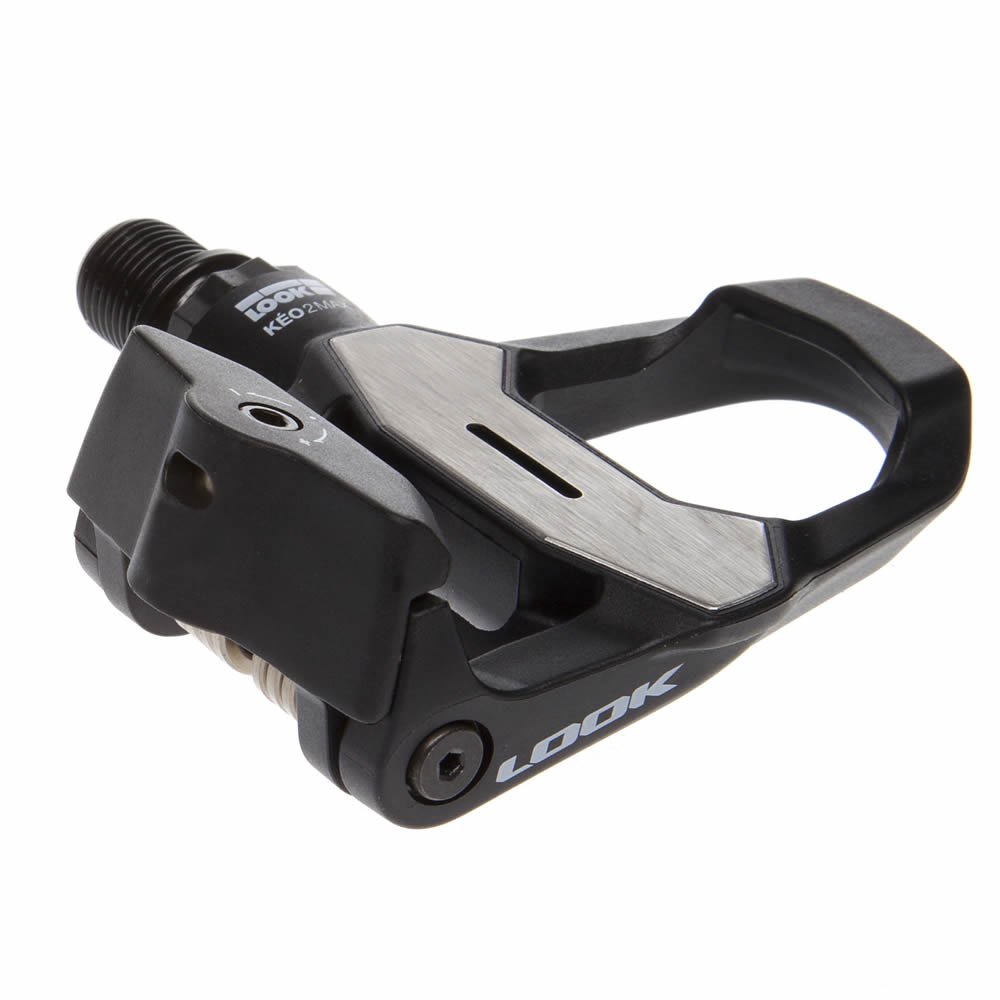
Image: The LOOK KEO 2 Max pedal, showcasing its design and contact surface.
The LOOK KEO 2 Max Pedal is engineered for road cycling, providing a balance of lightweight construction, durability, and efficient power transfer. This pedal features a composite polyamide body with a stainless steel wear plate, offering an increased contact surface area for enhanced comfort and stability. The oversized axle is equipped with dual seals to ensure long-term reliability and bearing longevity. This manual provides essential information for the proper installation, operation, and maintenance of your KEO 2 Max pedals.
Stàladh agus stàladh
1. Stàladh Peidal
Before installing the pedals, ensure your bicycle's crank arm threads are clean and lightly greased. This prevents seizing and allows for proper torque application.
- Identify the left (L) and right (R) pedals. The right pedal has a standard thread, and the left pedal has a reverse thread.
- Snàthaich am peidal deas deiseal a-steach don ghàirdean-crank deas.
- Snàthaich am peidal clì tuathal a-steach don ghàirdean-craoibh chlì.
- Tighten both pedals securely using a pedal wrench. Refer to your bicycle manufacturer's specifications for the recommended torque, typically around 35-40 Nm. Overtightening or undertightening can cause damage or unsafe operation.

Image: The LOOK KEO 2 Max pedals, illustrating their design for left and right crank arms.
2. Cleat Installation and Adjustment
The KEO 2 Max pedals utilize LOOK KEO cleats. Proper cleat positioning is crucial for comfort, efficiency, and injury prevention.
- Attach the cleats to your cycling shoes using the provided screws and washers.
- Fore/Aft Position: Adjust the cleat forward or backward to position the ball of your foot directly over the pedal axle.
- Lateral Position: Adjust the cleat left or right to ensure your foot is centered on the pedal, preventing your heel from rubbing against the crank arm or chainstay.
- Angular Float: KEO cleats are available with different degrees of float (e.g., 0°, 4.5°, 9°). Choose the float that provides comfortable knee alignment. The grey cleats typically offer 4.5° of float.
- Once the cleats are in the desired position, tighten the screws securely. Periodically check cleat screws for tightness.

Image: LOOK KEO 2 Max pedals shown with compatible KEO cleats.
3. Release Tension Adjustment
The KEO 2 Max pedals allow you to adjust the spring tension for cleat release. This determines how easily your foot disengages from the pedal.
- Locate the adjustment screw on the rear of the pedal body.
- Turn the screw clockwise to increase tension (harder release).
- Turn the screw counter-clockwise to decrease tension (easier release).
- Start with a lower tension setting, especially if you are new to clipless pedals, and gradually increase it as you become more comfortable. Ensure both pedals are set to the same tension.

Image: Detail of the KEO 2 Max pedal showing the cleat release tension adjustment screw.
Stiùireadh Obrachaidh
1. Clipping In
- Position the front of your cleat over the front lip of the pedal.
- Apply downward pressure with your heel, pushing it firmly into the pedal until you hear a distinct click. This indicates that the cleat is securely engaged.
- Practice clipping in and out in a safe, controlled environment before riding on public roads.
2. Clipping Out
- To disengage your foot, twist your heel outwards, away from the bicycle frame.
- The cleat will release from the pedal. Ensure you anticipate stops and practice this motion to avoid falls.
The KEO 2 Max pedals offer a wide contact surface, which contributes to efficient power transfer and a stable feel while pedaling. The low cleat contact height further enhances this connection between rider and bike.
Cumail suas
- Glanadh: Regularly clean your pedals and cleats with a damp cloth to remove dirt and debris. Avoid using harsh chemicals that could damage the materials.
- Lubrication: Periodically apply a small amount of dry lubricant to the pedal's spring mechanism to ensure smooth clipping in and out.
- Cleat Wear: Inspect your cleats regularly for wear. Worn cleats can lead to poor engagement, premature release, or difficulty releasing. Replace cleats when they show significant wear, especially around the engagement points.
- Sgrùdadh giùlain: The KEO 2 Max pedals feature an oversized axle with dual seals designed for longevity. If you notice any play in the pedal axle or unusual noises, consult a qualified bicycle mechanic for inspection and service. Do not attempt to disassemble the axle assembly yourself unless you have specialized tools and knowledge.
- Teannachd sgriubha: Periodically check the tightness of the cleat mounting screws and the pedal spindle screws to the crank arms.
Fuasgladh thrioblaidean
| Trioblaid | Adhbhar a dh’fhaodadh a bhith ann | Fuasgladh |
|---|---|---|
| Difficulty clipping in or out | Incorrect tension setting, worn cleats, debris in mechanism. | Adjust release tension (see Setup section). Inspect and clean cleats and pedal mechanism. Replace worn cleats. |
| Unwanted cleat release | Tension too low, excessively worn cleats. | Increase release tension. Replace worn cleats. |
| Pedal noise (creaking, clicking) | Loose pedal, dry cleat-pedal interface, worn bearings. | Check pedal tightness to crank arm. Apply dry lubricant to cleat-pedal contact points. If noise persists, have bearings inspected by a mechanic. |
| Foot discomfort or knee pain | Improper cleat position. | Re-adjust cleat fore/aft, lateral, and angular positions. Consider consulting a professional bike fitter. |
Sònrachaidhean
| Feart | Mion-fhiosrachadh |
|---|---|
| Brand | SEALLADH |
| Modail | KEO 2 Max (PEK2MG) |
| Dath | Glas |
| Stuth Corporra | Composite Polyamide |
| Wear Plate Material | Stàilinn nach meirg |
| Cuideam Nì (gach paidhir) | Approximately 0.4 Kilograms (400g) |
| Seòrsa aiseil | Oversized, Chromoly |
| Bearings | Two miniature ball bearings, one needle roller bearing |
| Seulachadh | Dual seals for increased longevity |
| Contact Surface Area | Increased by 12% compared to previous models |
| Cleat Compatibility | LOOK KEO standard |
| Release Tension | Co-fhreagarrach |
| Seòrsa spòrs | Cycling (Road Bike Pedals) |
| GTIN | 03700321561934 |
Barantas agus Taic
For detailed warranty information and customer support, please refer to the official LOOK Cycle website or contact your authorized LOOK dealer. Keep your proof of purchase for any warranty claims.